Timber handrails. Choose the section, then the panel.
Compare HR1 and HR2 timber handrails, explore the HR3–HR19 profile references and understand the fixed plain rails used by BS2. Our balustrades are supplied in natural LOSP-treated pine, unpainted and unprimed.
Replacing a handrail rather than a complete panel?
Tell us you need the rail only. Send a clear end-profile photograph, the overall section, required lengths and any rebate dimensions. A similar outer width does not establish a matching profile.
Rail timber: LOSP-treated, finger-jointed and laminated MGP10 pine
Our rails are made from LOSP-treated pine that is finger-jointed and laminated, with MGP10 specified for the rail timber. Rails are supplied natural, unpainted and unprimed. This rail specification was confirmed by the business on 2 November 2026; it is not a grade claim for the balusters or decorative inserts.
Confirm the required section, profile, treatment class and any species requirement in your written quote. MGP10 identifies a timber grade; it does not by itself establish the suitability or compliance of a complete installed barrier, its posts, connections or site conditions.
HR1 or HR2: what changes?
Start with the section that suits the existing timberwork and the panel you are ordering. The handrail changes the visible weight of the top line; its profile and connection also need to work with the rest of the assembly. For a repair, matching the cross-section and underside detail is more useful than choosing from a distant photograph.
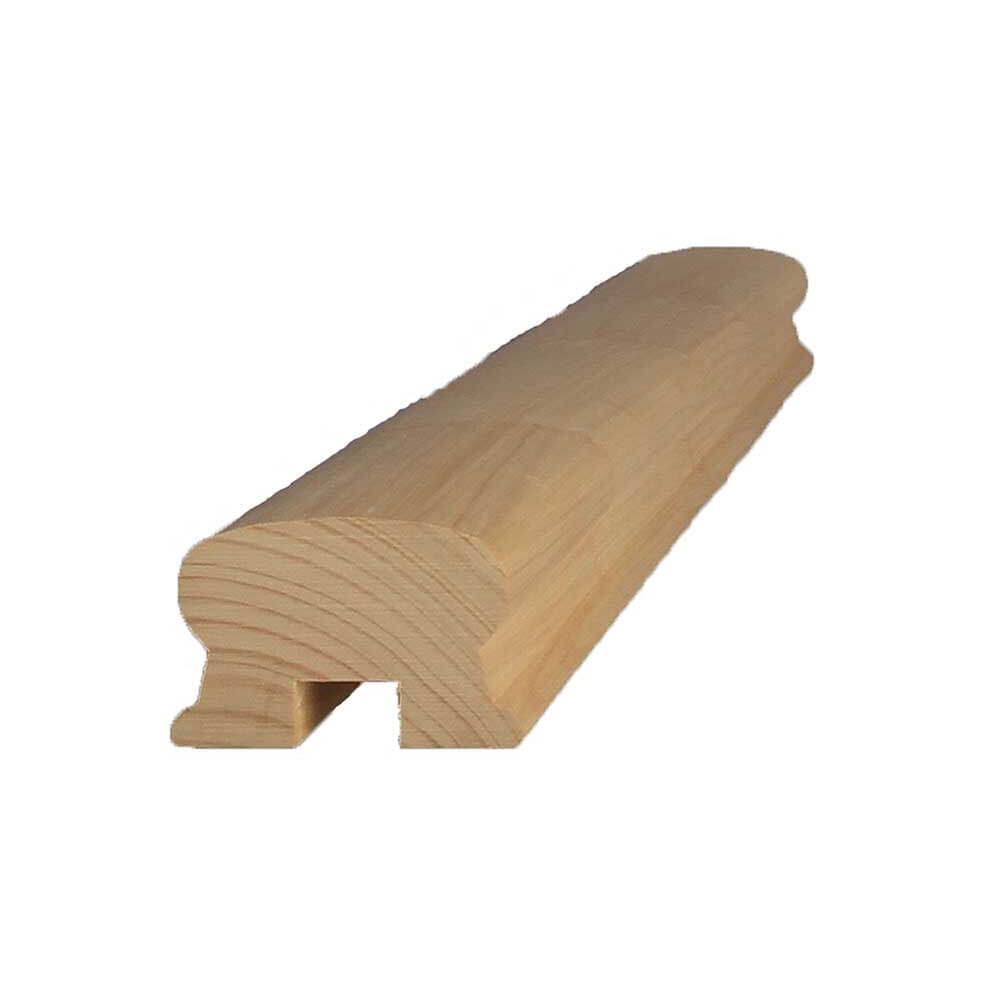
HR1 product reference. Confirm the actual supplied section and rebate.
HR1 — published range section 65 × 42 mm
Heritage’s range page identifies HR1 as 65 × 42 mm. Its price table describes HR1 as 65 × 45 mm, so the final section must be confirmed in your quote. Do not use either nominal dimension to order a matching repair without checking the profile.
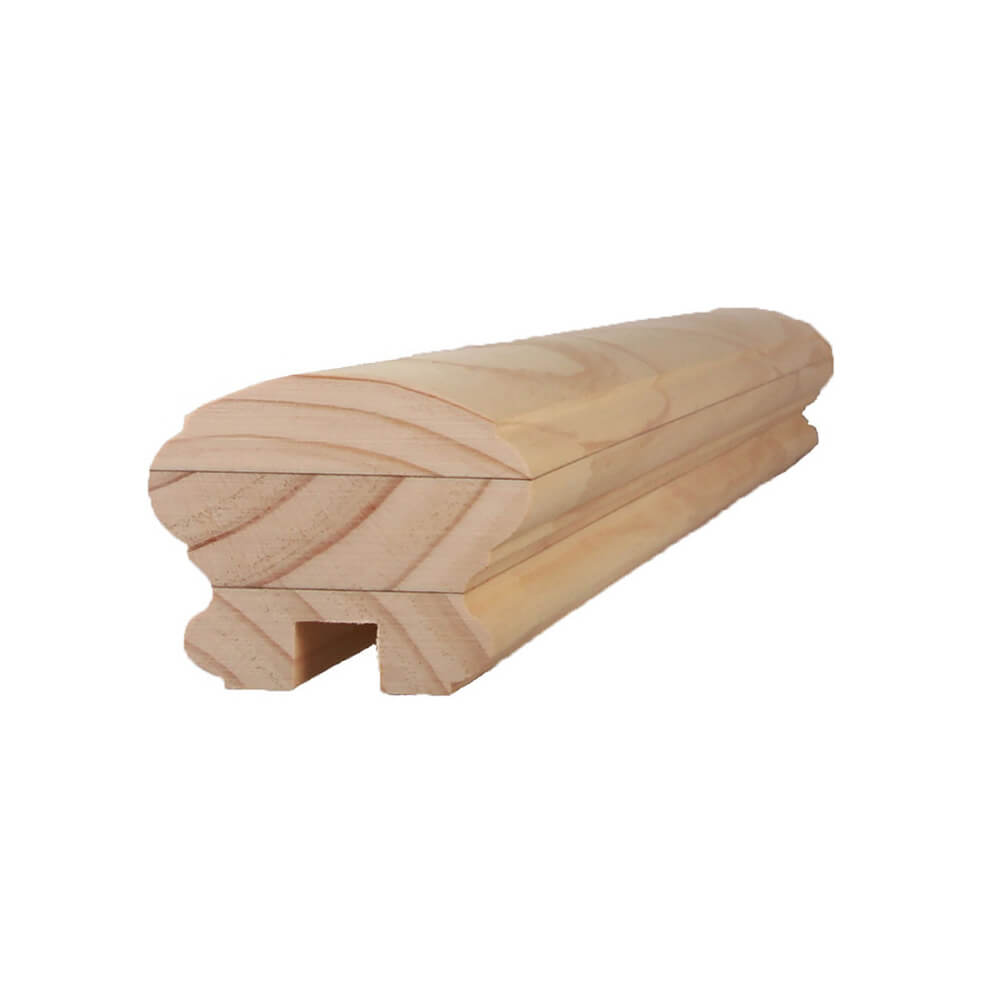
Compare BS1 with HR1 ↗HR2 product reference, shown separately so the shape can be compared with HR1.
HR2 — 85 × 65 mm
HR2 is the larger published standard section. Compare the shape as well as the dimensions, especially where a replacement joins an existing rail. Ask the team to confirm the underside detail and intended panel connection before ordering.
The Heritage brochure also identifies HR3 through HR19. These can be recorded as a handrail preference in the shop, but their section dimensions are not confirmed here. They require a quote that checks the profile, section, rebate and compatibility with your panel. They are not interchangeable upgrades to a priced HR1 or HR2 assembly.
BS2 is different from a panel with a selected moulded handrail. It uses plain rectangular 120 × 42 mm top and bottom rails, with 42 × 42 mm uprights face-fixed across them. HR1, HR2 and the extended profiles do not replace these fixed rails in the BS2 calculator.
State whether you need a loose rail, a kit or an assembled panel.
Record the profile code and section dimensions, with a square-on end photograph for matching work.
For a panel, measure the clear opening between posts. For rail-only supply, list the required lengths separately.
Describe level runs, corners and stairs separately. Stair work needs its own angle and site information.
The price guide separates component rates from complete panel rates. A priced panel already includes its selected assembly rails; do not add loose handrail prices again. Posts and delivery are excluded from displayed panel estimates.
Ready to compare your rail?
Send the profile code, dimensions and project notes. Final dimensions, supply scope and price are confirmed in your written quote. Allow up to four weeks from the time of order; an enquiry does not place an order.